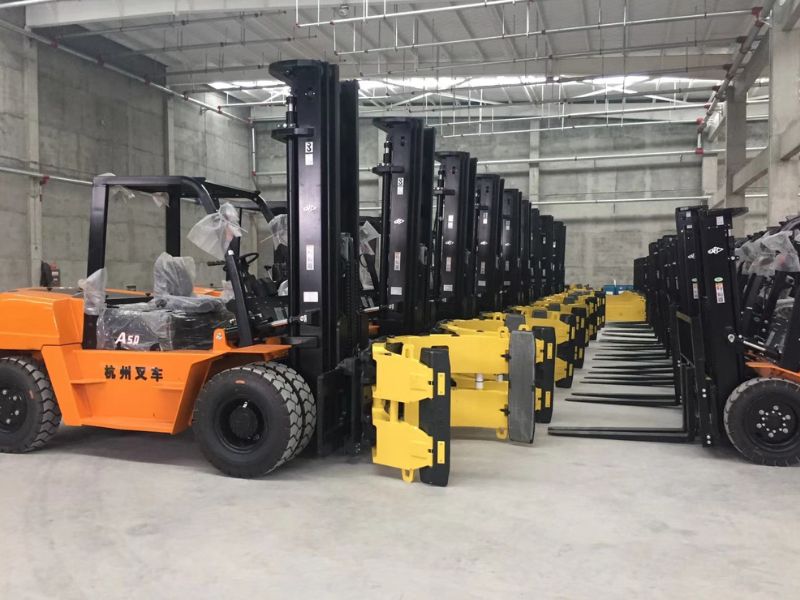
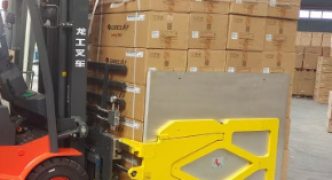
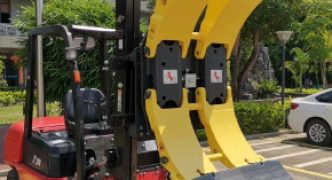
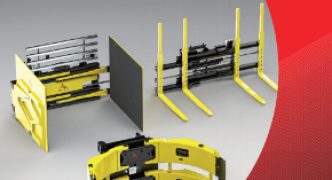
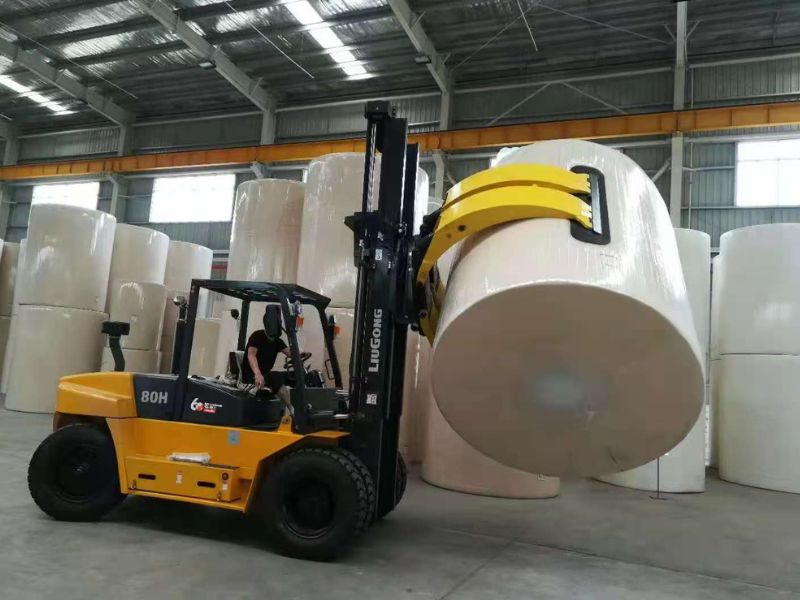
Paper Roll Clamp is a specialized forklift attachment designed for handling paper rolls. By gripping the outer surface of paper rolls, it enables pallet-free transportation, loading, unloading, and stacking operations.
This article explains the main types of Paper Roll Clamps, their features, application scenarios, and the key factors to consider when selecting the right model.
I. What Is a Paper Roll Clamp?
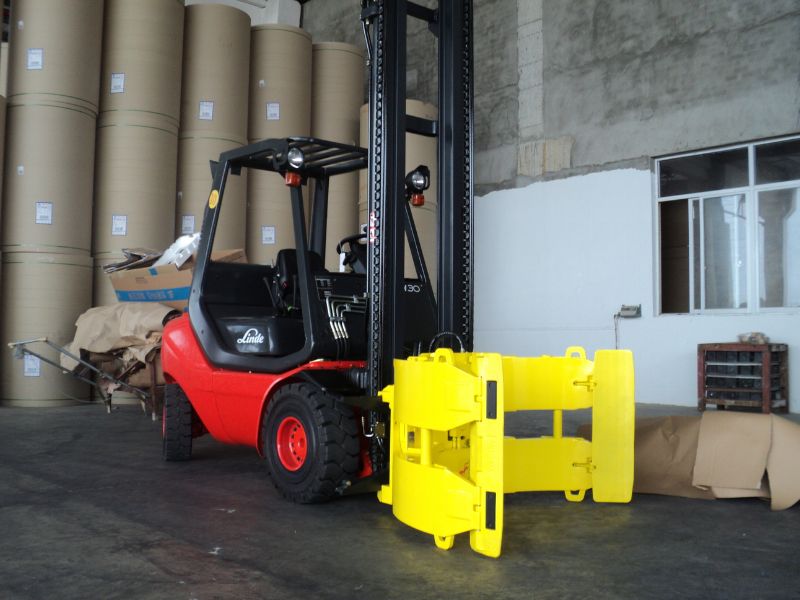
Paper Roll Clamp is a forklift attachment that uses hydraulic-controlled clamp arms to securely grip and transport paper rolls. It can directly handle paper rolls through clamping, making it suitable for efficient paper roll handling operations. Equipped with a 360
°
rotation function, a Paper Roll Clamp allows operators to easily change paper rolls between horizontal and vertical positions during handling, while improving flexibility in loading, unloading, and stacking operations.
II. Why Paper Roll Clamp?
Damage is the biggest variable in a paper roll’s journey. From mill to printer, warehouse to container, paper rolls are easily damaged by improper handling. Standard forklift forks cannot safely grip round paper rolls. Forks will dent, puncture or crush paper rolls, and cannot rotate rolls between vertical standing and horizontal bilge position. With Paper Roll Clamp, all the above mentioned problems can be readily solved to achieve safe and efficient handling of paper rolls.
III. Applications of Paper Roll Clamps
Paper Roll Clamps are widely used in industries that require frequent paper roll handling, including paper manufacturing, paper packaging, printing, and port logistics. They are commonly used for finished paper roll transfer, raw material handling, warehouse storage, production line transportation, and loading or unloading operations. By enabling pallet-free handling and providing 360° rotation, Paper Roll Clamps offer a more flexible and efficient solution for moving paper rolls while reducing the risk of surface damage during handling.
IV. What Types of Paper Roll Clamps Are Available?
Different paper materials and working conditions require different Paper Roll Clamp configurations. Generally, Paper Roll Clamps can be divided into three main types:
1. Standard Paper Roll Clamp
The Standard Paper Roll Clamp is the most commonly used type and is suitable for handling various conventional paper rolls. It is widely applied in general paper roll handling operations, including paper roll storage, warehouse transportation, production line transfer, and loading or unloading applications.
2. Paper Roll Clamp-Split Arm
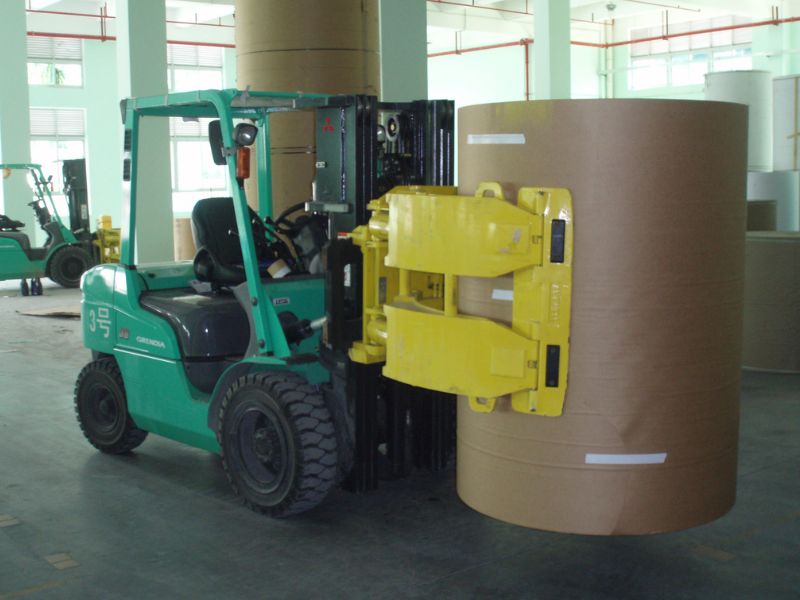
The Paper Roll Clamp-Split Arm features independently operated upper and lower clamp arms. This design allows the clamp to handle two paper rolls with different diameters at the same time, providing greater flexibility for applications involving mixed-size paper rolls or multiple paper roll specifications.
3. Paper Roll Clamp for Tissues
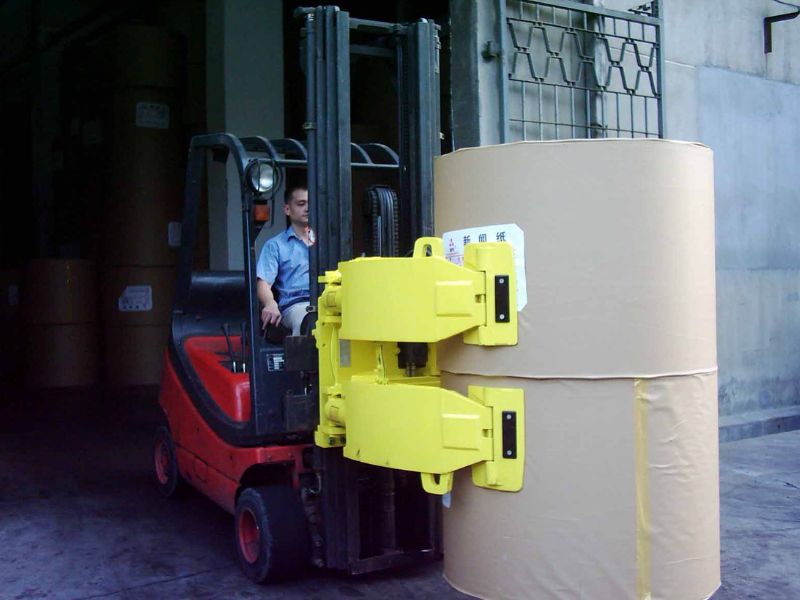
The Paper Roll Clamp for Tissues is designed for soft and easily damaged paper products, such as tissue paper. It uses specially designed clamp pads to reduce pressure on paper roll surfaces and provide gentler handling. This type is commonly used in tissue paper production, soft paper manufacturing, and applications where surface protection is especially important.
·Quick Self-Check to Confirm Your Clamp Type
·Only handle single standard paper rolls → Standard Paper Roll Clamp
·Need to lift two rolls of different sizes at one time → Paper Roll Clamp-Split Arm
·Transport soft, easily damaged tissue rolls → Paper Roll Clamp for Tissues
V. How to Choose the Right Paper Roll Clamp?
Selecting a suitable type and model requires consideration of some factors.
1. Paper Roll Diameter
Paper roll diameter directly affects the clamp opening range and gripping stability. For applications involving smaller diameter rolls, the Short Arm Positioned Type can provide better adaptability compared with fixed short arms.
2. Paper Roll Weight
Paper roll weight is also a critical factor when selecting the right Paper Roll Clamp. If the paper roll weight exceeds the rated capacity of the attachment, it may cause damage to both the clamp and the paper roll, resulting in potential safety risks and unnecessary economic losses. Therefore, the maximum paper roll weight should always be confirmed before selecting a suitable model.
3. Paper Roll Material
Different paper materials have different requirements for clamp pads. For example, normal paper rolls can use standard cast clamp pads, while tissue paper requires dedicated tissue paper clamp configurations.
4. Forklift Specifications
A Paper Roll Clamp must be properly matched with the forklift. Important factors include mounting class(or forklift capacity) and hydraulic system requirements. Proper matching ensures reliable operation and helps the attachment achieve optimal performance.
(mounting class / capacity:Standard forklift mounting grade, mainly Class 2 / Class 3 / Class 4, you can check the mounting class or capacity on your forklift nameplate)
Parameter Checklist:
Paper roll info:
Max roll diameter: _______mm Min roll diameter: _______mm
Max single roll weight: _______kg Min single roll weight: _______kg
Paper type: □ Standard paper □ Tissue paper □ Kraft paper □ Printing paper □ Other:_______
Working demand Need to carry two rolls of different sizes at once? □ Yes □ No
Forklift info:
Forklift tonnage: _______kg / Forklift mounting class: _______
VI.Optional Clamp Pads & Short Arm Configurations
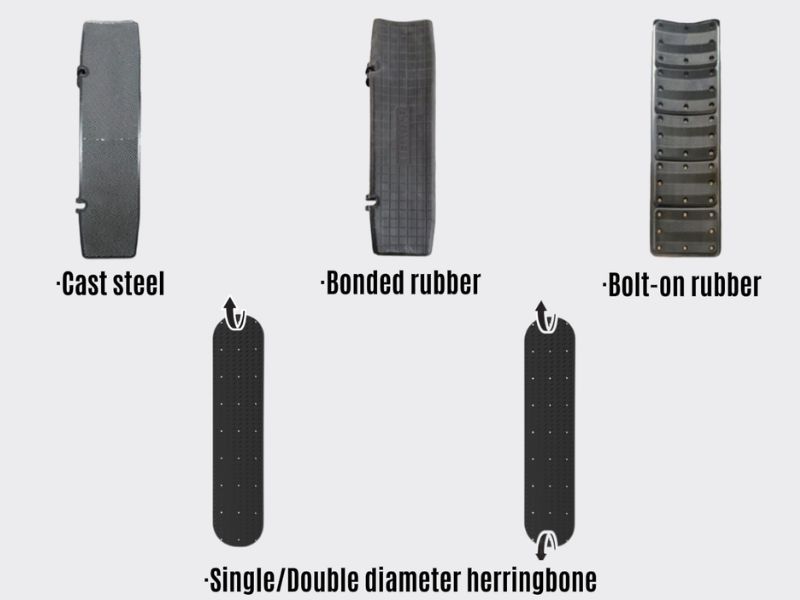
1. Clamp Pads Options
Different clamp pads are optional for different paper surfaces:
Standard cast steel pads: For common and standard paper rolls
Bonded rubber or bolt-on rubber pads: For delicate and high-grade paper rolls, preventing scratching regular paper
Single diameter herringbone pads: Ideal for dense tissue, such as industrial toweling.Double diameter herringbone pads: Ideal for medium dense tissue, such as common facial and toweling grades.
2. Short Arm Options
Paper Roll Clamps are available with two short arm configurations: Short Arm Fixed Type (R_F) and Short Arm Positioned Type (R_P). The fixed type is suitable for standard paper roll handling, while the positioned type can be adjusted to handle smaller diameter paper rolls, expanding the application range of the attachment.
VII. FAQ
1. What industries use Paper Roll Clamps?
Paper Roll Clamps are widely used in paper manufacturing, packaging, printing, and port logistics industries for paper roll transportation, stacking, and handling.
2. Can a Paper Roll Clamp rotate paper rolls?
Yes. All Paper Roll Clamps feature a 360° rotation function, allowing operators to switch paper rolls between horizontal and vertical positions according to handling requirements.
3. What is the difference between a Standard Paper Roll Clamp and a Paper Roll Clamp-Split Arm?
A Standard Paper Roll Clamp is suitable for general paper roll handling requirements, while a Paper Roll Clamp-Split Arm features independently operated upper and lower clamp arms, allowing two paper rolls with different diameters to be handled together.
4. How can a Paper Roll Clamp prevent damage to paper rolls?
Selecting the correct clamp type and clamp pad configuration is important. Rubber clamp pads or tissue paper clamp configurations can provide gentler handling for paper rolls with sensitive surfaces.
5. What information is needed to select the right Paper Roll Clamp?
The main information includes: ①Paper roll diameter ②Paper roll weight ③Paper roll material ④Forklift capacity
VIII. Conclusion: Full Process for Your Inquiry
·Quick self-check to confirm the clamp type you need
·Measure and fill the parameter checklist
·Send your demand type + complete parameters to our salesperson
If you have any questions, feel free to contact our sales team. We will provide professional support and help you pick the most suitable product.