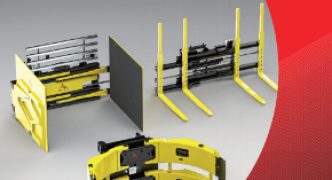
I. What Is a Forklift Pipe Handler?
Handling pipes safely and efficiently can be challenging due to their cylindrical shape, varying dimensions, and heavy weight. In industries such as steel manufacturing, concrete production, construction, and industrial warehousing, choosing the right handling equipment is essential for improving productivity and maintaining load stability.
A forklift pipe handler is a specialized attachment designed for the pallet-free handling of rigid cylindrical objects under normal temperature conditions. It is suitable for handling construction steel pipes, cement pipes, and other compatible pipe products during lifting, transportation, stacking, and storage.
Unlike standard forklift forks, pipe handlers are designed with application-specific structures to grip, support, or restrain cylindrical loads according to their handling requirements.
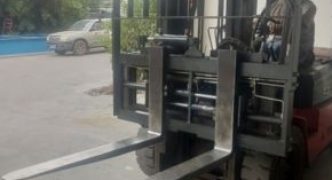
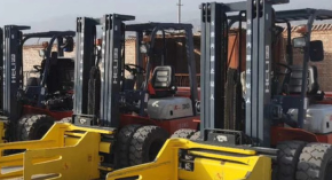
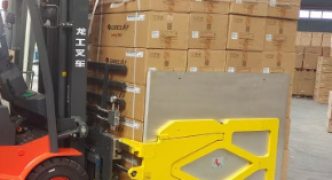
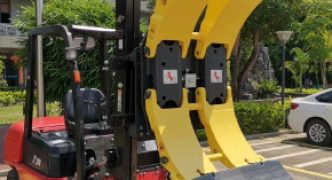
ANTWELL offers four main types of pipe handlers: Concrete Pipe Clamps, Steel Pipe Clamps, Hinged Pipe Clamps, and Pipe Hold Down. Different models are available for handling single or multiple pipes. Depending on the model and application, additional functions such as rotation, tilting, clamping, and fork positioning can also be selected.
II. Types of ANTWELL Forklift Pipe Handlers
Different pipe materials and handling requirements call for different attachment designs. Understanding the structure and function of each type is the first step in selecting the right solution.
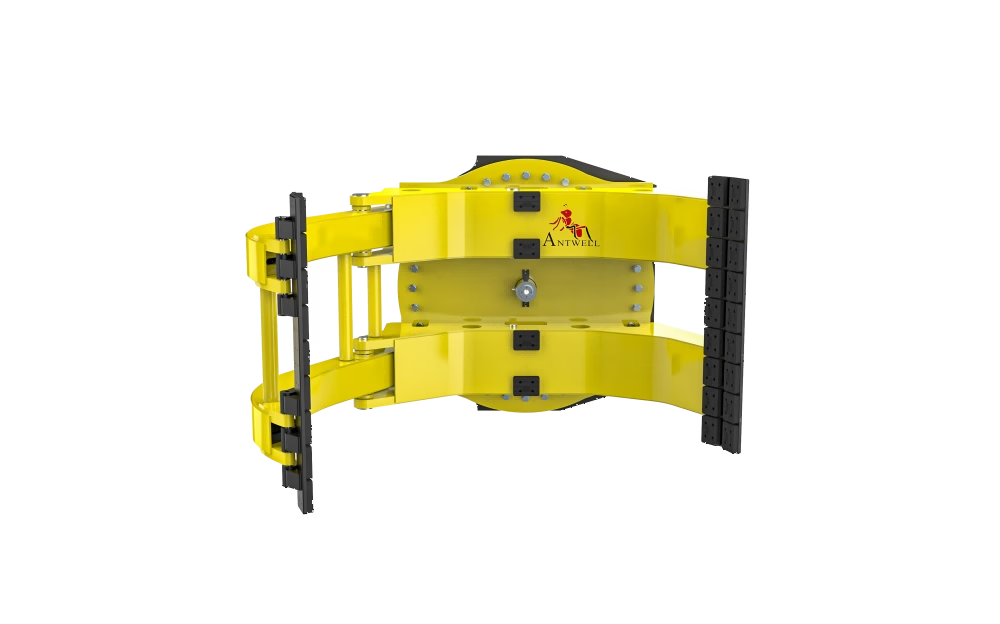
1. Concrete Pipe Clamps
Concrete Pipe Clamps are designed for handling compatible concrete pipes and cement pipes. They provide a dedicated clamping solution for lifting, transporting, stacking, and storing cylindrical concrete products.
Concrete pipes can be heavy and may be sensitive to localized impact or excessive clamping pressure. Therefore, the attachment should be selected according to the pipe dimensions, weight, and structural characteristics.
Key Features:
Designed for pallet-free handling of compatible concrete pipes.
Available in different opening ranges to accommodate different pipe diameters.
360° rotation in both directions.
Different mounting classes and load capacities are available.
Contact pad dimensions and clamping configurations vary by model.
Typical Applications:
Precast concrete pipe manufacturing plants
Cement pipe production facilities
Construction material yards
Drainage pipe storage and distribution centers
Loading and unloading of compatible concrete pipes
Selection Considerations:
Pipe diameter, individual pipe weight, required opening range, contact surface design, attachment rated capacity, and forklift compatibility should all be considered.
2. Steel Pipe Clamps
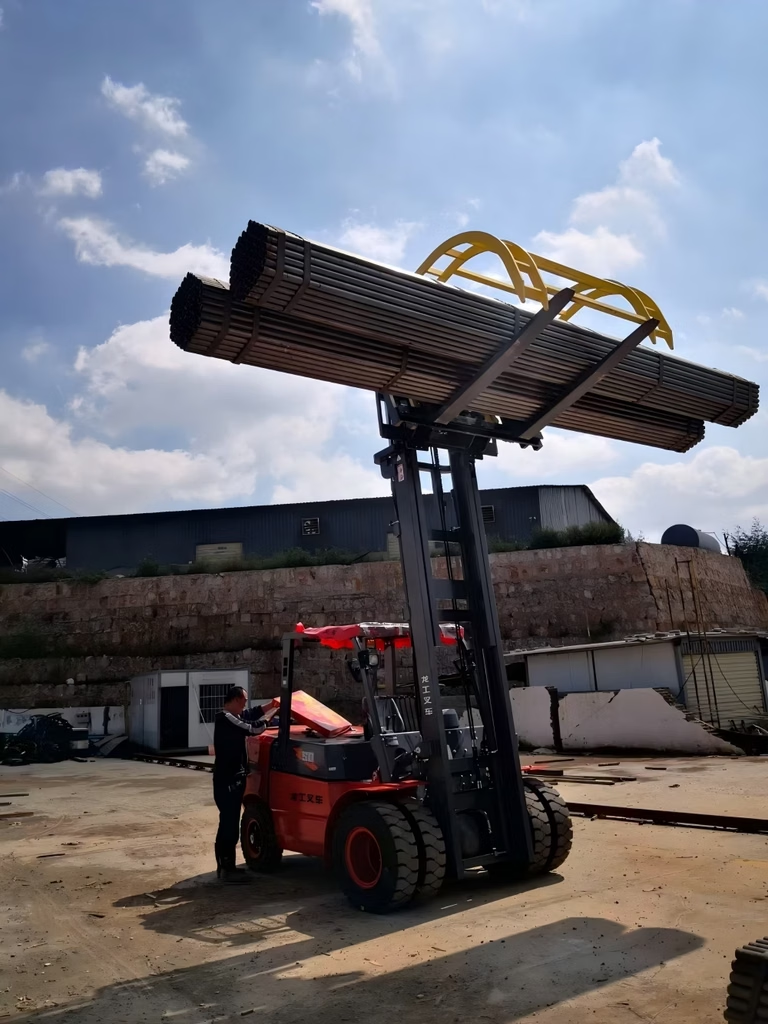
Steel Pipe Clamps are designed for handling compatible steel pipes and other cylindrical steel products. They are suitable for applications in steel processing facilities, pipe manufacturing plants, metal warehouses, and industrial distribution centers.
Steel pipes may vary in diameter, wall thickness, weight, and surface finish. The attachment configuration should match these characteristics and the intended handling method.
Key Features:
Designed for handling compatible steel pipes and cylindrical steel products.
Available with different mounting classes and load capacities.
Tilting function with a specified tilt angle of 45°/-14°.Supplied without forks.
Typical Applications:
Steel pipe manufacturing plants
Steel processing centers
Metal material warehouses
Industrial pipe storage yards
Steel pipe loading and unloading operations
Selection Considerations:
Pipe diameter, pipe weight, surface finish, gripping configuration, required handling capacity, and forklift hydraulic functions should be confirmed before ordering.
For pipes with protective coatings or sensitive surface finishes, the contact surfaces and handling process should also be evaluated to help minimize scratches and other surface damage.
3. Hinged Pipe Clamps
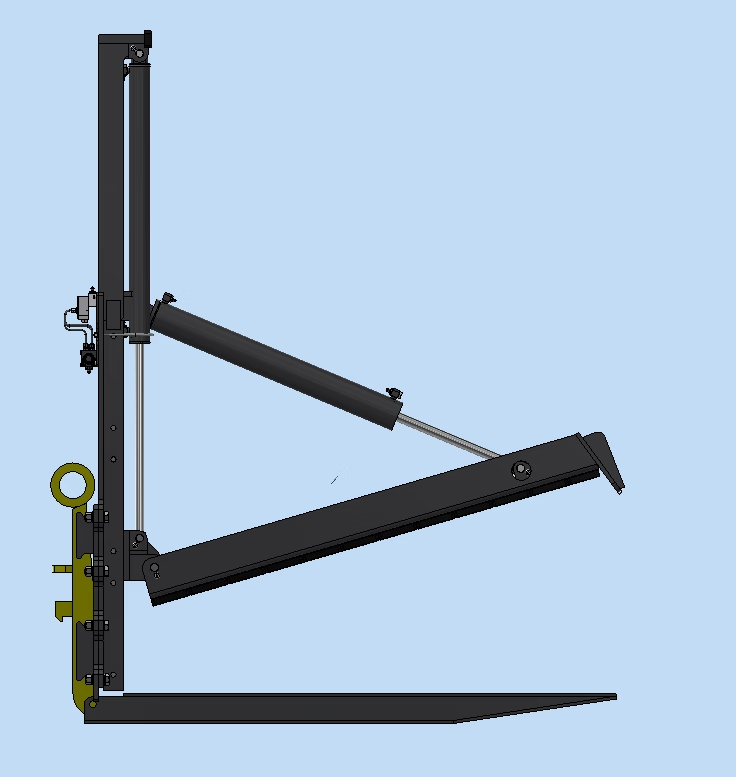
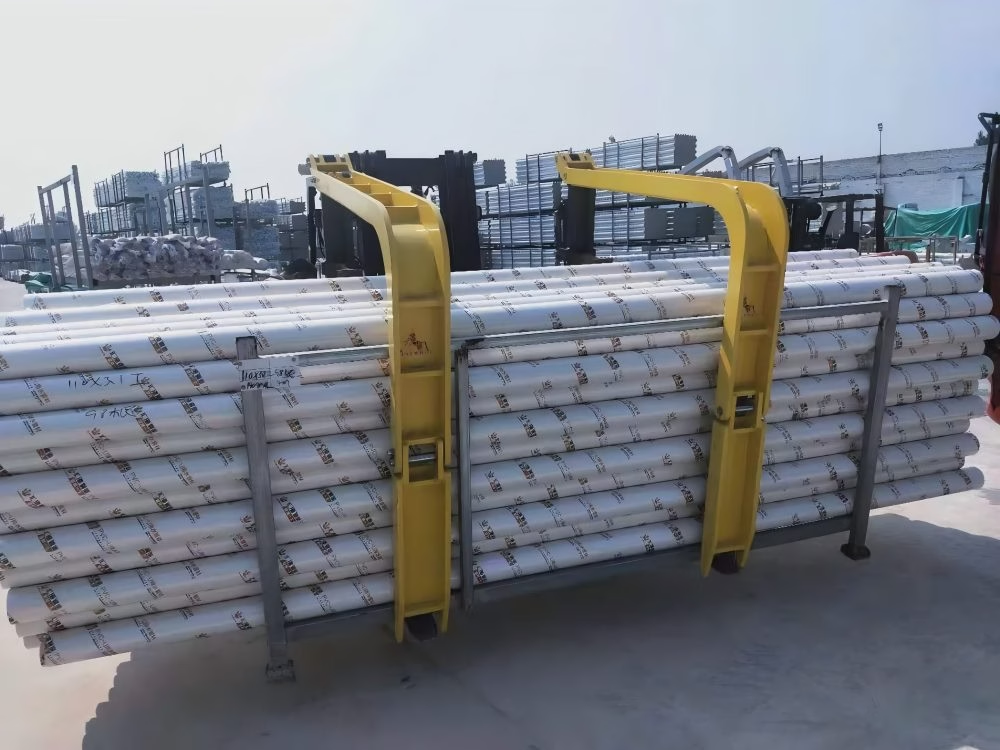
Hinged Pipe Clamps feature a hinged-arm structure designed for specialized pipe-handling operations. The long arms can swing upward to an open position and return to the working position, providing clearance for load engagement and release.
This hinged-arm mechanism allows the arm position to change during operation, making it suitable for applications that require an opening and closing movement.
Key Features:
Hinged-arm structure for opening and closing operations.
Long arms provide clearance for positioning and releasing compatible loads.
Fork positioning function is available through the specified fork adjustment configuration.
Different fork spread ranges are available depending on the model.
Designed for installation on a compatible forklift carriage.
Typical Applications:
Handling compatible pipe products in industrial environments
Transferring pipe materials between production and storage areas
Pipe handling operations requiring hinged-arm movement
Handling pipe loads with different positioning requirements
Selection Considerations:
Pipe dimensions, individual pipe weight, arm opening range, fork spread range, attachment rated capacity, and forklift compatibility should be evaluated.
4. Pipe Hold Down
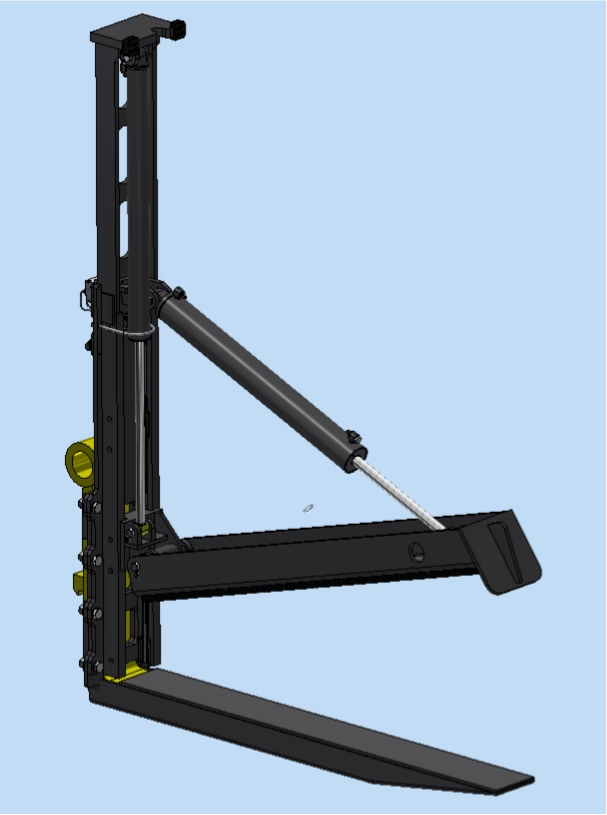
Pipe Hold Down is designed to help secure compatible pipe loads during forklift handling. It features a lower supporting structure and a hydraulically operated upper hold-down arm.
The upper arm can be raised to provide clearance for loading and positioning pipes, then lowered toward the working position to help restrain the load. The lower structure supports the pipes from underneath, while the upper arm helps control unwanted movement during handling.
This support-and-restraint design is suitable for applications where pipes need to be supported from below and restrained from above.
Key Features:
Hydraulically operated upper hold-down arm.
Lower supporting structure for carrying compatible pipe loads.
Adjustable lifting stroke to accommodate loading and positioning requirements.
Pin-type mounting configuration.
Supplied without forks.
Typical Applications:
Pipe storage and handling areas
Industrial material warehouses
Pipe manufacturing facilities
Pipe transportation and positioning operations
Applications requiring both lower support and upper restraint
Selection Considerations:
Pipe dimensions, individual and total load weight, pipe arrangement, upper arm operating range, contact pad dimensions, attachment rated capacity, mounting method, and forklift compatibility should be confirmed.
III. Structural Features of ANTWELL Pipe Handlers
ANTWELL pipe handlers are designed with structural features that support reliable operation in demanding material-handling environments.
1. Full Steel Structure
The frame is constructed with a full steel structure to provide high strength and durability, making it suitable for demanding operating conditions.
2. Self-Lubricating Supports
Self-lubricating supports are used in the arm movement areas to provide enhanced self-lubrication and support smooth, reliable operation.
3. Special Bushings at Hinge Points
Special bushings are fitted at the hinge points to provide enhanced self-lubrication, eliminating the need for periodic grease maintenance at these points.
These structural features help improve operational reliability and reduce routine maintenance requirements.
IV. How to Choose the Right Forklift Pipe Handler?
Choosing the right pipe handler requires a clear understanding of the pipe specifications, handling requirements, and forklift capabilities. The following factors should be considered before selecting a model.
1. Pipe Diameter and Dimensions
Pipe diameter directly affects the required gripping range or opening clearance.
Before selecting an attachment, identify the minimum and maximum pipe diameters to be handled. If your operation involves several pipe sizes, confirm that the attachment can accommodate the entire required range.
Pipe length and load arrangement should also be considered, as they can affect load stability and the handling method.
2. Pipe Weight and Total Load
The maximum individual pipe weight is a critical selection factor. If multiple pipes are handled in one operation, the total load weight and load arrangement must also be considered.
The attachment must have sufficient rated capacity for the intended application. The forklift’s residual capacity after installing the attachment must also be verified at the applicable load center.
Do not select an attachment based solely on the forklift’s nominal lifting capacity.
3. Pipe Material and Surface Condition
Different pipe materials have different handling requirements.
Concrete pipes: Consider structural strength, surface condition, and sensitivity to localized pressure or impact.
Steel pipes: Consider surface finish, protective coatings, and the risk of scratches or deformation.
Other pipe materials: Confirm that the attachment structure and contact surfaces are suitable for the intended material.
The attachment and handling method should be selected to match the pipe’s characteristics and the required level of surface protection.
4. Attachment Type and Handling Method
Identify the required handling method before choosing a model.
Choose Concrete Pipe Clamps for compatible concrete pipe handling applications.
Choose Steel Pipe Clamps for compatible steel pipe products.
Consider Hinged Pipe Clamps when the application requires a hinged-arm opening mechanism.
Consider Pipe Hold Down when pipes need to be supported from below and restrained from above.
The final choice should always be confirmed against the actual attachment specifications and working conditions.
5. Forklift Specifications and Mounting Compatibility
A forklift pipe handler must be compatible with the forklift on which it will be installed.
Important specifications include:
Forklift brand and model
Rated forklift capacity
Rated load center
Forklift carriage mounting class
Available hydraulic functions
Hydraulic flow and operating pressure, where applicable
Attachment weight and resulting residual forklift capacity
The mounting class determines the mechanical interface between the attachment and the forklift carriage. It is different from the forklift’s rated lifting capacity, so both specifications must be checked.
6. Hydraulic Requirements
Different attachment functions require different hydraulic configurations.
According to ANTWELL’s product specifications:
Concrete Pipe Clamps with 360° rotation require two additional hydraulic circuits from the forklift.
Steel Pipe Clamps with 360° rotation require two additional hydraulic circuits from the forklift.
Hinged Pipe Clamps generally require three additional hydraulic circuits. The forks-fixed type requires two additional hydraulic circuits.
The required hydraulic circuits, flow, and operating pressure should be confirmed with the forklift manufacturer before installation.
7. Working Environment
The working environment can influence attachment selection and configuration.
Outdoor construction sites may involve uneven ground and changing operating conditions, while pipe manufacturing facilities may require frequent, repetitive handling.
Consider the available operating space, handling frequency, storage arrangement, and site-specific requirements before confirming the attachment model.
The rated load capacity is a design value calculated based on the rated load center. For the actual overall capacity of the forklift-attachment combination, please consult the forklift manufacturer.
V.Forklift Pipe Handler Selection Checklist
Preparing the relevant information in advance helps the supplier evaluate your application and recommend a suitable configuration.
1. Pipe Information
Pipe material: Concrete / Steel / Other
Maximum pipe diameter: ______ mm
Minimum pipe diameter: ______ mm
Pipe length: ______ mm
Maximum individual pipe weight: ______ kg
Minimum individual pipe weight: ______ kg
Number of pipes per handling cycle: ______
Surface finish or coating requirements: ______
2. Handling Requirements
Preferred attachment type: Concrete Pipe Clamps / Steel Pipe Clamps / Hinged Pipe Clamps / Pipe Hold Down / To be confirmed
Main operation: Lifting / Transportation / Loading and unloading / Positioning / Other
Required handling or restraint method: ______
Working environment: Indoor / Outdoor / Other
Additional requirements: ______
3. Forklift Information
Forklift brand and model: ______
Rated forklift capacity: ______ kg
Rated load center: ______ mm
Forklift carriage mounting class: ______
Hydraulic flow, if applicable: ______ L/min
Hydraulic operating pressure, if applicable: ______ MPa or bar
Available hydraulic functions: ______
Providing the forklift nameplate, carriage dimensions, and photos or videos of the actual handling operation can help the technical team evaluate compatibility more accurately.
VI. Frequently Asked Questions About Forklift Pipe Handlers
1. What is a forklift pipe handler used for?
A forklift pipe handler is used to grip, support, or restrain compatible pipe products during lifting, transportation, positioning, and loading or unloading. The specific function depends on the attachment design.
2. What is the difference between Concrete Pipe Clamps and Steel Pipe Clamps?
Concrete Pipe Clamps are designed for compatible concrete pipe handling applications, while Steel Pipe Clamps are designed for compatible steel pipe products. Their configurations should be selected according to the pipe material, dimensions, weight, and handling requirements.
3. What is special about Hinged Pipe Clamps?
Hinged Pipe Clamps feature long hinged arms that swing between open and working positions. This movement provides clearance for load engagement and release. The actual operating range and handling capabilities depend on the specific model.
4. What is Pipe Hold Down used for?
Pipe Hold Down combines a lower supporting structure with a hydraulically operated upper hold-down arm. The arm can be raised for loading and positioning and lowered to help restrain compatible pipe loads during handling.
5. Can one forklift pipe handler handle different pipe diameters?
This depends on the attachment design and its specified operating range. Before handling different pipe sizes, confirm the permitted dimensions, load limits, and operating requirements with the manufacturer.
6. What information is needed to select a forklift pipe handler?
The main information includes pipe material, diameter, length, individual and total load weight, handling method, forklift mounting class, rated capacity, and hydraulic specifications where applicable.
If you are unsure which attachment is suitable, provide these details to the supplier for technical evaluation.
VII. Find the Right Forklift Pipe Handler for Your Application
Selecting the right forklift pipe handler starts with understanding your pipe specifications, handling requirements, and forklift capabilities.
Whether your application requires Concrete Pipe Clamps, Steel Pipe Clamps, Hinged Pipe Clamps, or Pipe Hold Down, ANTWELL offers a range of attachment solutions to meet different pipe-handling requirements.
Looking for a suitable pipe-handling solution?
Identify the type of pipe you need to handle.
Measure the pipe dimensions and confirm the load weight.
Determine the required handling method and attachment functions.
Prepare your forklift specifications and hydraulic information.
Send your requirements to our sales team for technical evaluation.Contact ANTWELL today to discuss your pipe-handling requirements and find a suitable forklift attachment for your application.