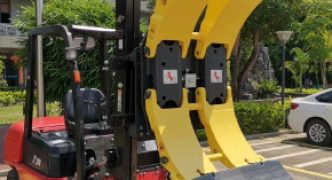
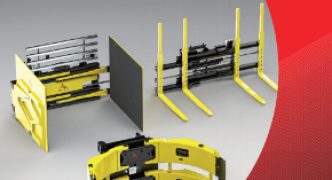
I. What Is a Fork Positioner?
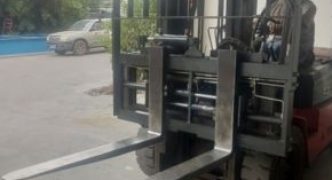
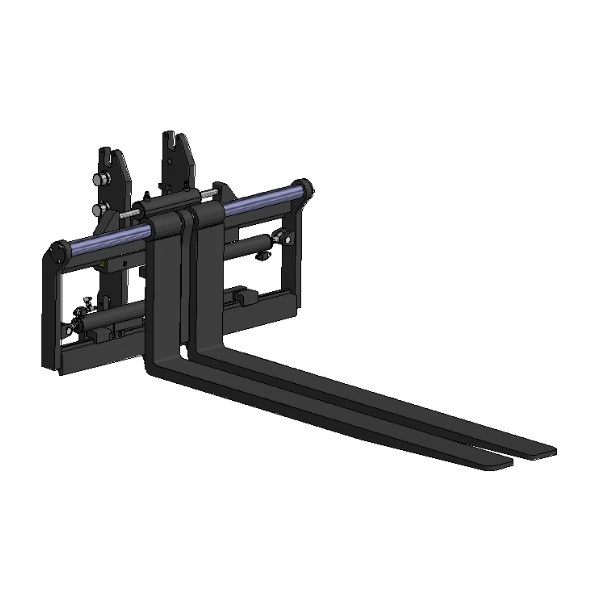
A Fork Positioner is a hydraulic forklift attachment designed to adjust the distance between two forks according to different load widths and pallet sizes. By operating the hydraulic control system, forklift operators can move the forks inward or outward directly from the driver’s seat, without manually adjusting fork spacing.
Compared with conventional fixed forks, a Fork Positioner offers greater flexibility when handling loads of different dimensions. It helps improve positioning accuracy, reduce manual work, and increase operational efficiency in daily material handling operations.
ANTWELL offers three main series of Fork Positioners to meet different forklift configurations and operating requirements: 8-Series Fork Positioners, 9-Series Fork Positioners, and Integral Fork Positioners.
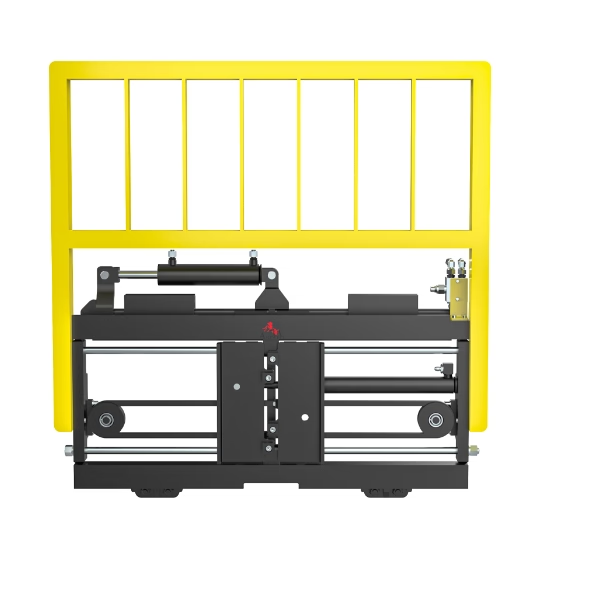
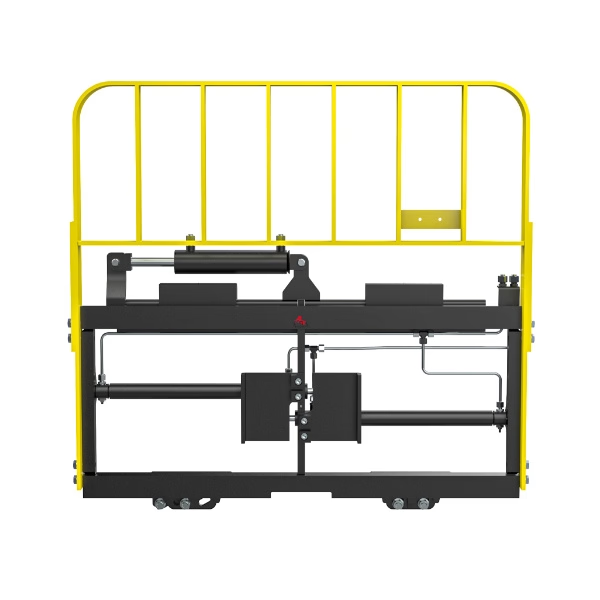
II. Why Use a Fork Positioner?
In warehouses, logistics centers, and manufacturing facilities, forklifts often handle pallets and loads of different widths. With conventional fixed forks, operators may need to stop and manually adjust fork spacing when switching between different load sizes, which takes additional time and effort.
A Fork Positioner allows operators to adjust fork spacing hydraulically from the driver’s seat, making it easier to handle different pallet sizes and load configurations.
Key benefits include:
Improved Handling Efficiency: Adjust fork spacing directly from the driver’s seat, reducing manual adjustment and unnecessary downtime.
Greater Handling Flexibility: Accommodate pallets and loads of different widths with convenient hydraulic adjustment.
More Accurate Fork Positioning: Help operators align the forks with pallet openings and load positions more efficiently.
Reduced Manual Work: Minimize the need for operators to leave the forklift and reposition forks manually.
Versatile Applications: Support a wide range of material handling operations across different industries.
III. Applications of Fork Positioners
Fork Positioners are widely used in industries where forklifts frequently handle pallets, materials, and loads of different sizes.
Typical applications include:
1.Warehousing and Distribution: Handling pallets of different widths during storage, picking, stacking, and order fulfillment.
2.Logistics and Transportation: Supporting frequent loading, unloading, and pallet transfer operations.
3.Manufacturing Facilities: Handling raw materials, components, and finished products with different dimensions.
4.Packaging and Industrial Goods: Accommodating different pallet sizes and load configurations during production and transportation.
5.General Industrial Handling: Improving operational flexibility when switching between different load widths.
By enabling hydraulic fork spacing adjustment, Fork Positioners help reduce manual intervention and make daily forklift operations more convenient and efficient.
IV. What Types of Fork Positioners Are Available?
Different forklift configurations and operating requirements call for different Fork Positioner designs.
ANTWELL offers three main product series:
1. 8-Series Fork Positioners – Cylinder-Driven Type
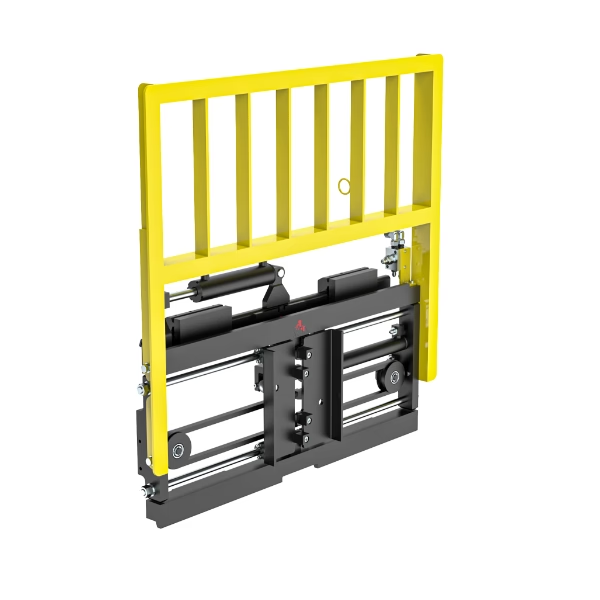
The ANTWELL 8-Series Fork Positioner features a cylinder-driven hydraulic adjustment design. Hydraulic cylinders control fork movement, allowing operators to adjust fork spacing according to different pallet widths and load dimensions.
It is suitable for general warehouse, logistics, and industrial material handling applications that require convenient and reliable fork adjustment.
Key Features:
Cylinder-driven hydraulic fork adjustment
Convenient adjustment of fork spacing
Multiple models for different load capacities
Various mounting classes and carriage widths
Suitable for general industrial and warehouse applications
2. 9-Series Fork Positioners – Chain-Driven Type
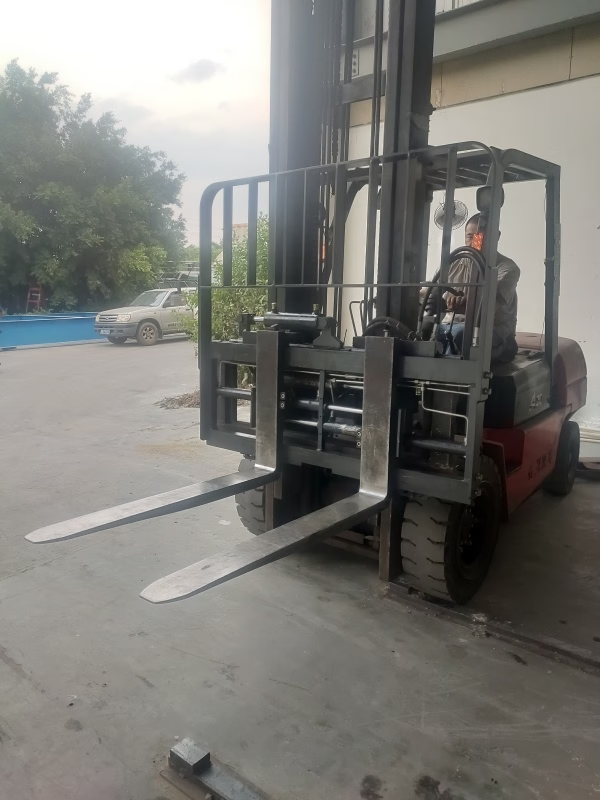
The ANTWELL 9-Series Fork Positioner adopts a chain-driven adjustment design. The chain mechanism transfers movement to the forks, helping achieve coordinated fork spacing adjustment.
This series is designed for applications requiring flexible fork adjustment and synchronized movement.
Key Features:
Chain-driven fork adjustment mechanism
Synchronized fork movement
Multiple configurations for different forklift capacities
Different mounting and dimensional options
Suitable for a variety of industrial material handling applications
3. Integral Fork Positioners – Integrated Type
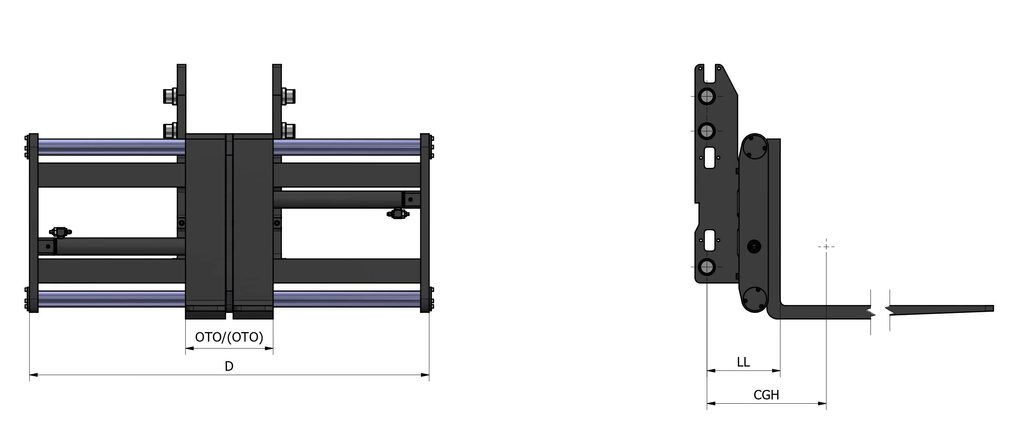
ANTWELL Integral Fork Positioners feature an integrated structural design in which the fork positioning mechanism is incorporated into the forklift mast.
This configuration is designed for specific forklift applications that require an integrated installation arrangement and compatible structural dimensions.
Key Features:
Integrated fork positioning structure
Hydraulic fork spacing adjustment
Multiple model options for different load and mounting requirements
Application-specific structural configurations
Suitable for forklifts requiring an integral fork positioning solution
Quick Self-Check to Identify the Right Fork Positioner
Need a cylinder-driven adjustment design → 8-Series Fork Positioner
Need a chain-driven adjustment design → 9-Series Fork Positioner
Require an integrated structural configuration → Integral Fork Positioner
The final selection should also take forklift specifications, load requirements, and installation dimensions into account.
V. How to Choose the Right Fork Positioner?
Selecting the right Fork Positioner requires more than simply checking the forklift’s rated capacity. The attachment must also match the required fork opening range, mounting dimensions, hydraulic system, and actual working conditions.
Here are five important factors to consider:
1. Forklift Capacity and Load Center
Forklift capacity and load center are essential factors when selecting a Fork Positioner.
Confirm the forklift’s rated capacity, the actual load weight, and the load center distance. The attachment’s weight and its horizontal center of gravity will affect the forklift’s residual lifting capacity.
Always check the forklift load chart or consult the forklift manufacturer to ensure that the complete configuration meets the required lifting conditions.
2. Mounting Class and Carriage Dimensions
The Fork Positioner must be compatible with the forklift’s fork carriage.
Important dimensions include:
Forklift mounting class
Carriage width
Minimum truck carriage width
Mounting and installation dimensions
Common mounting classes include Class II, Class III, and Class IV. Confirm the actual mounting class and dimensions from the forklift nameplate or technical documentation before selecting a model.
3. Required Fork Opening Range
The required fork opening range is one of the most important selection factors.
Consider the minimum and maximum widths of the pallets and loads to be handled. The selected Fork Positioner must provide a suitable adjustment range to accommodate the actual load dimensions.
An appropriate opening range helps improve fork positioning and handling flexibility.
4. Hydraulic Requirements
Fork Positioners require a compatible hydraulic supply from the forklift.
Before selecting a model, confirm:
Available auxiliary hydraulic circuits
Required hydraulic connections
Hydraulic flow rate
Operating pressure
Hose and connection arrangements
Proper hydraulic matching helps ensure smooth and reliable fork adjustment.
5. Operating Conditions and Application Requirements
Different working environments may require different Fork Positioner configurations.
Consider the following:
Type and dimensions of the loads
Pallet sizes and variations
Handling frequency
Working environment
Required adjustment range
Forklift configuration
These details help determine whether an 8-Series, 9-Series, or Integral Fork Positioner is more suitable.
Fork Positioner Selection Checklist
Load and application information:
Actual load weight: ______ kg
Load center distance: ______ mm
Minimum load width: ______ mm
Maximum load width: ______ mm
Required minimum fork opening: ______ mm
Required maximum fork opening: ______ mm
Application / load type: __________________
Forklift information:
Forklift brand: __________________
Forklift model: __________________
Rated capacity: ______ kg
Mounting class: __________________
Carriage width: ______ mm
Available hydraulic circuits: __________________
Providing these details will help us identify a suitable Fork Positioner model more accurately.
VI. Technical Specifications
ANTWELL offers different Fork Positioner models with various capacities, mounting configurations, and dimensional specifications.
The main technical parameters include:
Model number
Rated capacity and load center
Mounting class
Opening range
Total sideshifting range
Carriage width
Minimum truck carriage width
Effective thickness
Horizontal center of gravity
Attachment weight
Detailed dimensions and model-specific specifications are available in the corresponding 8-Series, 9-Series, and Integral Fork Positioner technical specification tables.
Please refer to the relevant product specification table when comparing different models.
VII. Why Choose ANTWELL Fork Positioners?
ANTWELL specializes in forklift attachments and provides a range of Fork Positioner solutions for different forklift configurations and material handling applications.
Our product range includes cylinder-driven, chain-driven, and integral designs, allowing customers to select suitable configurations according to their operational requirements.
We focus on:
Multiple Product Configurations: Three main series to accommodate different forklift designs and applications.
Application-Based Selection: Product recommendations based on forklift specifications, load dimensions, and operating requirements.
Technical Support: Assistance with model selection, mounting compatibility, and technical specifications.
Flexible Solutions: Different models and configurations to meet various material handling requirements.
Whether you are a forklift manufacturer, equipment distributor, or end user, ANTWELL can support your Fork Positioner selection with relevant product information and technical assistance.
VIII. Frequently Asked Questions (FAQ)
Q1: What is a Fork Positioner used for?
A Fork Positioner is a hydraulic forklift attachment that allows operators to adjust the distance between the forks from the driver’s seat. It is used to handle pallets and loads of different widths without manually repositioning the forks.
Q2: What is the difference between 8-Series and 9-Series Fork Positioners?
The main difference is the fork adjustment mechanism. The 8-Series uses a cylinder-driven design, while the 9-Series uses a chain-driven design. The appropriate series depends on the forklift configuration and application requirements.
Q3: What is an Integral Fork Positioner?
An Integral Fork Positioner features an integrated structural configuration with a built-in fork positioning mechanism. It is designed for forklift applications requiring a compatible integrated mounting arrangement.
Q4: Can a Fork Positioner handle different pallet sizes?
Yes. A Fork Positioner allows operators to hydraulically adjust fork spacing to accommodate different pallet widths and load dimensions, provided they fall within the attachment’s specified opening range and capacity.
Q5: What information is needed to select the right Fork Positioner?
The main information includes:
1.Forklift brand and model
2.Forklift rated capacity
3.Mounting class
4.Carriage width
5.Required minimum and maximum fork opening
6.Actual load weight and load center
7.Hydraulic system specifications
These details help determine the appropriate model and configuration.
IX. How to Start Your Fork Positioner Inquiry
Looking for a suitable Fork Positioner for your forklift?
Follow these simple steps:
1.Identify Your Requirements: Determine whether you need an 8-Series, 9-Series, or Integral Fork Positioner.
2.Prepare Your Specifications: Confirm your forklift information, carriage dimensions, load requirements, and required fork opening range.
3.Contact ANTWELL: Send us your requirements and technical information for model selection and quotation.
Our sales and technical teams will help you identify a suitable Fork Positioner solution based on your forklift and application requirements.
Contact ANTWELL today to discuss your Fork Positioner requirements.
ANTWELL — Your Application. Your Requirements. Our Solution.