1. What is Residual Capacity
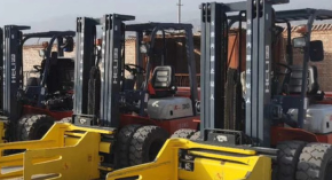
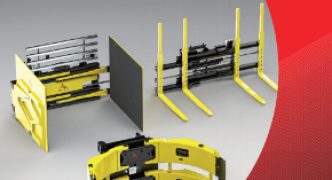
When a forklift is equipped with an attachment and actually handling loads, factors that affect the lifting capacity include not only the forklift itself, but also the weight of the attachment, the position of the load’s center of gravity, the load center, and the lifting height. Hence, the actual load capacity will be less than the rated load capacity.
Unlike the forklift’s rated load capacity or the attachment’s rated capacity, residual capacity refers to the maximum load weight that the forklift system can safely handle under real working conditions.
2. Why Calculate Residual Capacity
Calculating residual capacity is essential for several reasons:
① Mitigate Safety Risks and Prevent Accidents:
Overloading is the primary safety hazard in forklift and attachment operations. Exceeding the residual capacity may cause the forklift to tip forward, deformation or breakage of the attachment, or load falling. Such incidents can damage equipment and, more importantly, may result in injuries or fatalities. Accurate calculation of residual capacity helps prevent overloading at the source, ensuring the safety of personnel, equipment, and loads.
② Protect Equipment Life and Reduce Maintenance Costs:
Operating regularly beyond the residual capacity accelerates wear on forklift components, increases the frequency of failures, raises repair and replacement costs, and shortens equipment lifespan. By matching loads precisely, equipment can operate within a safe and optimal load range, reducing maintenance costs and extending service life.
③ Ensure Compliance and Minimize Management Risks:
Industrial equipment operation standards require forklifts and attachments to follow safe load limits. Calculating and adhering to residual capacity is a fundamental compliance requirement. Accidents caused by exceeding safe loads can lead to legal liabilities, economic compensation, and affect a company’s safety performance rating.
In short, calculating residual capacity is the foundation for safe and efficient forklift operations.
3. How to Calculate Residual Capacity
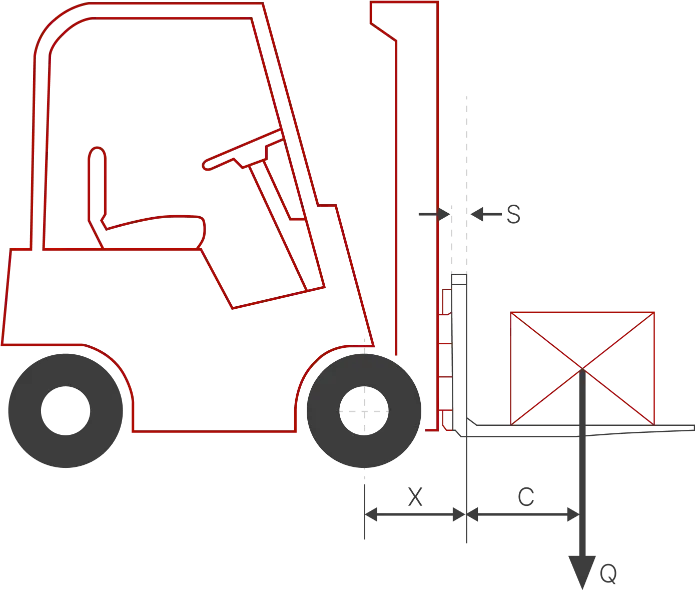
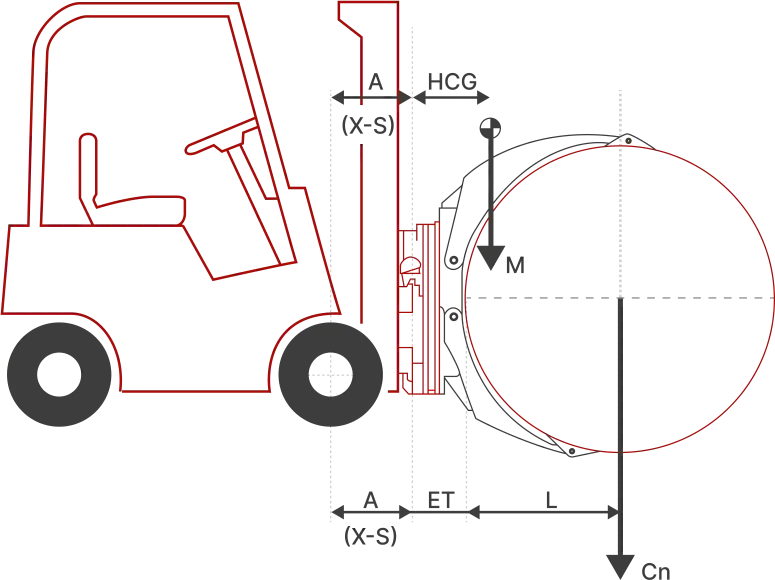
Residual capacity is calculated based on the principle of moment balance.
Forklift parameters:
Q: Forklift load capacity (kg)
X: Horizontal distance from front wheel center to fork front end (mm)
C: Load center (mm)
S: Fork thickness (mm)
Attachment parameters:
M: Weight of attachment (kg)
A: Distance from front wheel center line to carriage face (mm), typically, A = X − S
ET: Horizontal distance from fork frame front end to load rear end (mm)
HCG: Horizontal distance from fork frame front end to attachment center of gravity (mm)
L: Horizontal distance from load rear end to load center (mm)
Residual capacity (G) is then calculated as:
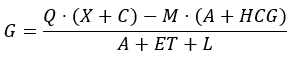
Example Calculation:
Q=3000kg X=480mm C=500mm S=50mm
M=680kg A=480-50=430mm HCG=300mm ET=200mm L=500mm

4. Quick Residual Capacity Calculation
To help customers quickly assess the compatibility between our attachments and forklifts, ANTWELL provides a Capacity Calculator on our official website. No complex calculations or professional knowledge are required, and the entire process is simplified. You only need to enter the actual values into the respective fields, and the system will automatically calculate the residual capacity (G).
5. Conclusion
Residual capacity is the “lifeline” for the safe operation of forklift attachments. It not only helps prevent safety incidents and protects equipment lifespan, but also supports companies in achieving compliant operations and improving efficiency while reducing costs.
We recommend using ANTWELL’s Capacity Calculator on the official website to evaluate attachments and handling loads before making a selection, making your operations safer and more efficient.
ANTWELL is committed to enhancing the user experience by providing intuitive tools, practical solutions, and reliable support, helping our customers work smarter and safer every day.