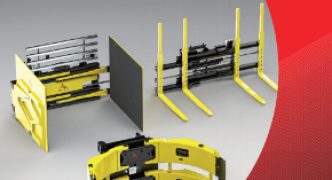
In the paper industry’s production and logistics chain, materials such as paper rolls, pulp bales, and finished cartons present continuous handling challenges due to their heavy weight, sensitivity to surface damage, and diverse forms. Traditional manual handling is not only inefficient but also increases the risk of product damage and workplace safety risks.
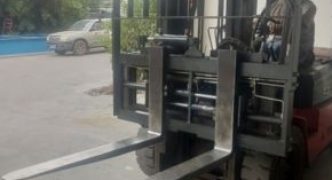
ANTWELL has developed purpose-built forklift attachments that enable forklifts to go beyond basic handling functions, offering stronger adaptability in complex operating conditions and significantly improving efficiency, safety, and flexibility in paper material handling.
I. Attachment Types and Functions
Material forms in the paper industry vary widely—from cylindrical paper rolls to compressed pulp bales. ANTWELL provides a full range of forklift attachments designed to address these diverse handling requirements with precision.
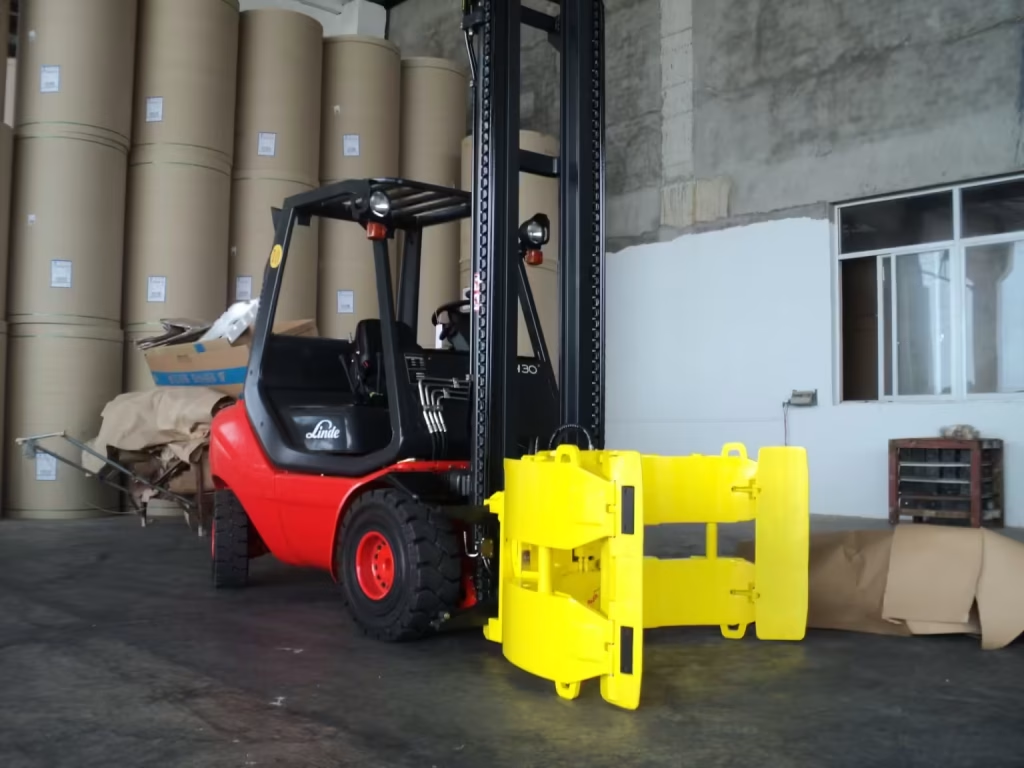
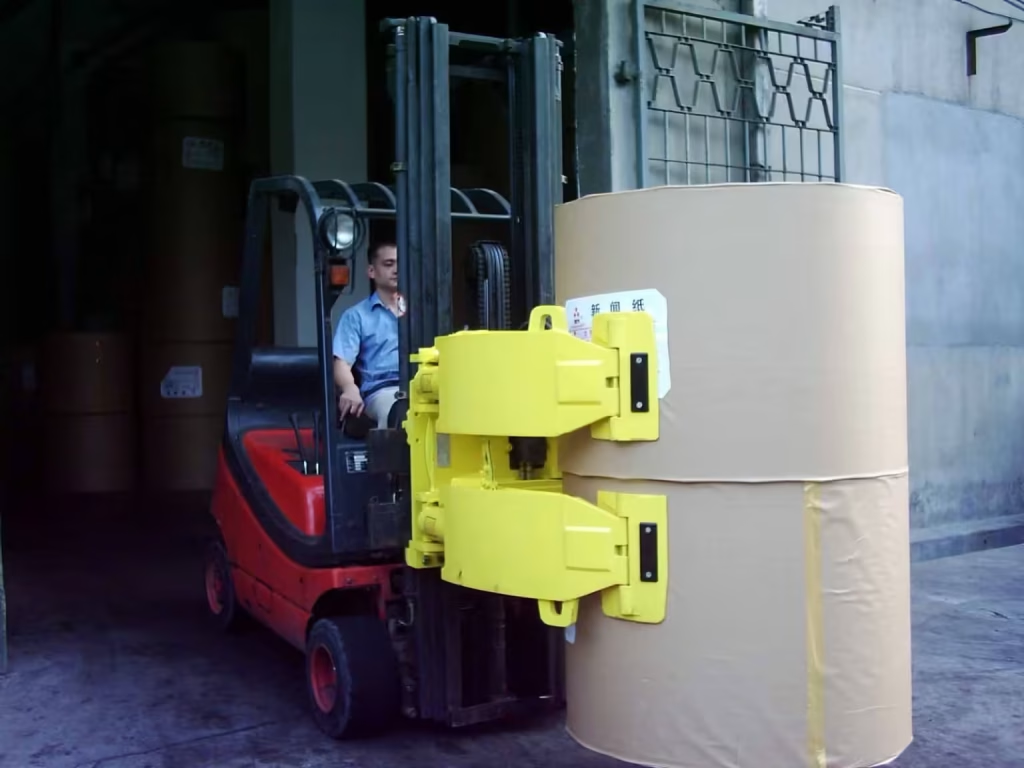
1.Paper Roll Clamps
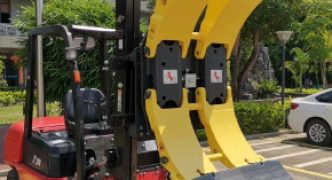
Paper roll clamps are essential for safe, efficient, and damage-free handling of paper rolls, which are heavy and easily damaged. Equipped with high-elastic, anti-slip rubber pads, these clamps increase friction to prevent slipping while protecting the paper surface from scratches. They support continuous 360° rotation for easy horizontal and vertical orientation changes without manual adjustment, making them a standard solution in the paper industry. Split-arm models feature independently operated arms, allowing precise handling of rolls with different diameters simultaneously, reducing handling cycles and improving equipment utilization. For high-grade soft paper products such as tissue and napkins, specialized clamps with curved, patterned rubber pads provide gentler clamping force to prevent deformation or surface texture damage, ensuring delicate products are handled safely and efficiently.
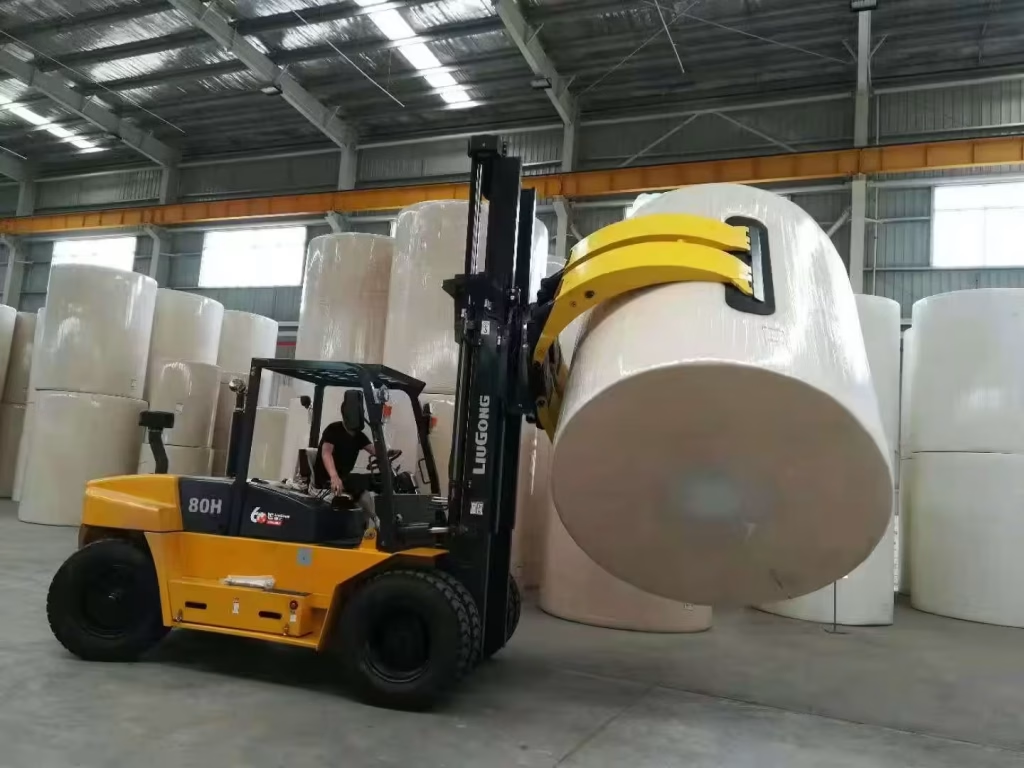
2.Bale Clamps
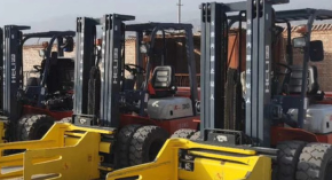
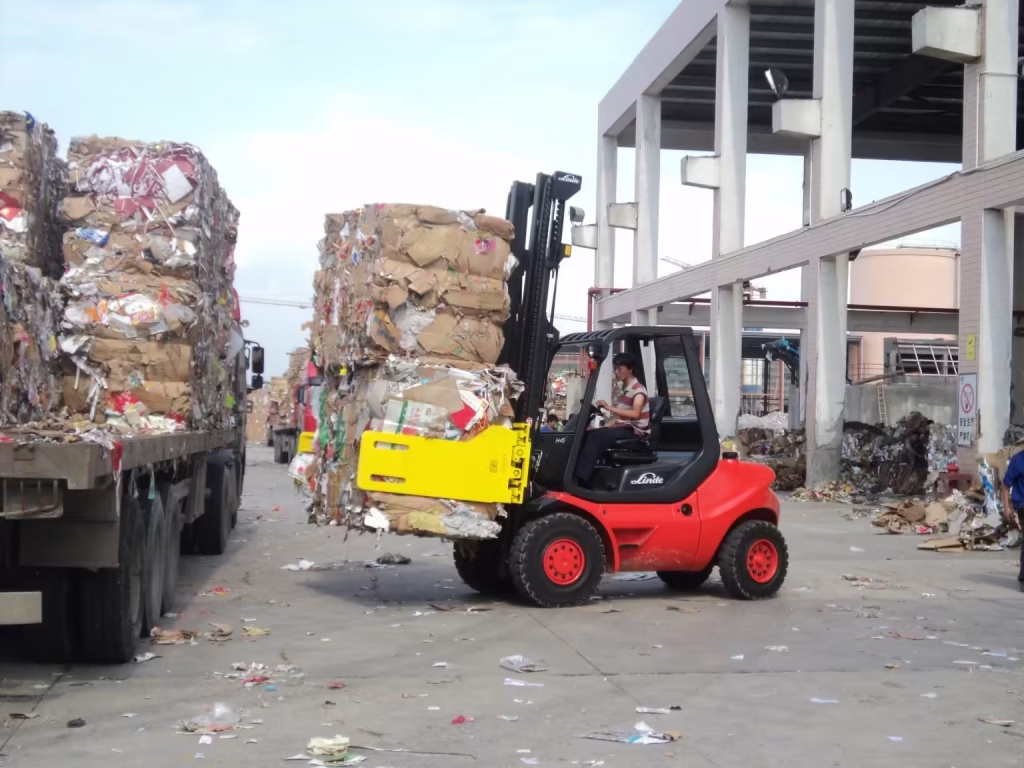
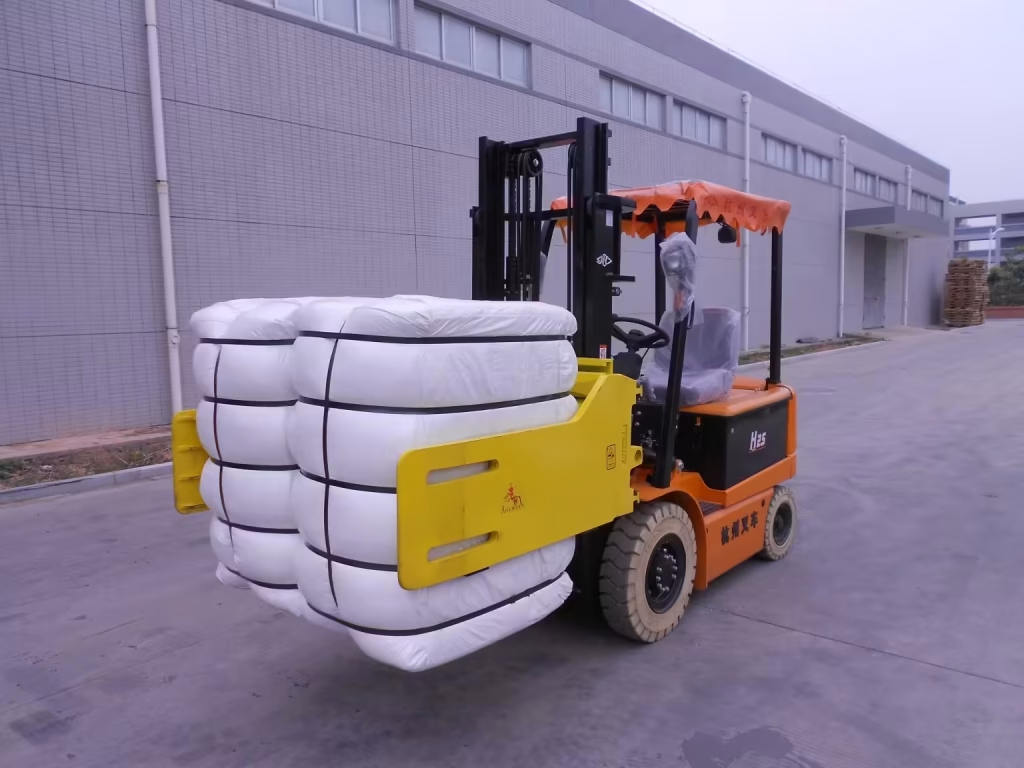
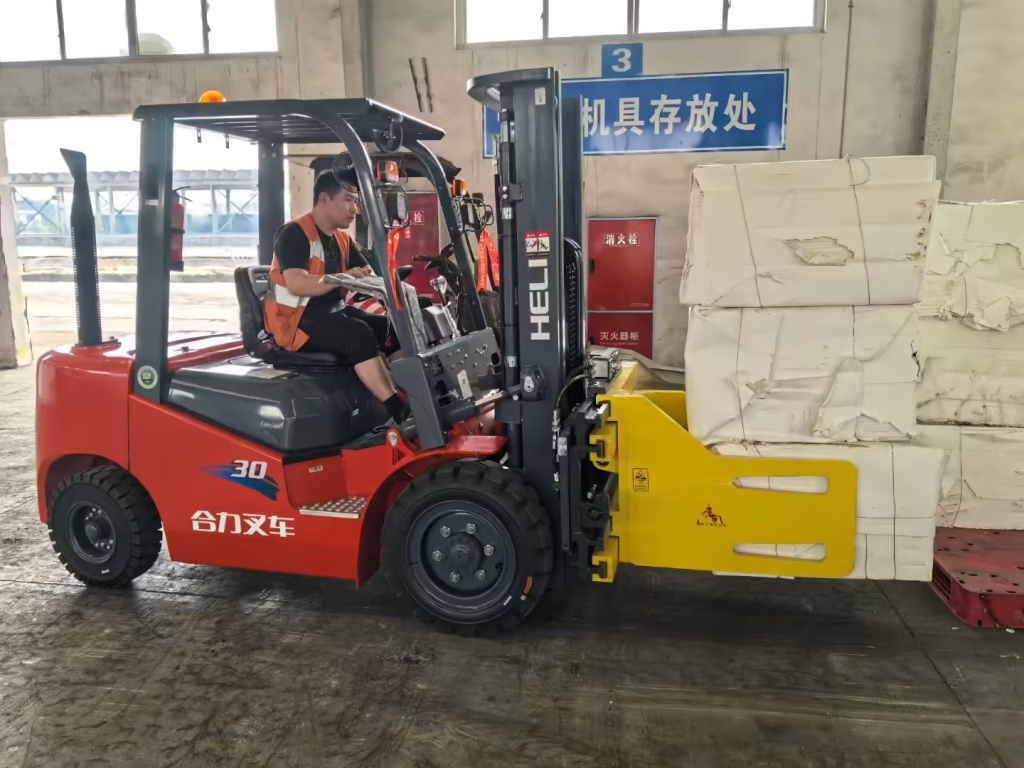
Soft-packaged materials such as pulp bales and compressed waste paper bales are prone to deformation and instability, making bale clamps essential for safe and efficient handling in the paper industry. L-series bale clamps feature a lightweight design with moderate clamping force, ideal for lighter materials. H-series clamps, built with an all-steel frame and high-strength hydraulic system, provide powerful and evenly distributed clamping force, suitable for large bales and high-intensity warehouse operations. R-series bale clamps add continuous 360° rotation to standard functionality, allowing flexible adjustment of load orientation during unloading or stacking. Specifically engineered pulp bale clamps use all-steel frame structure for exceptional strength and resistance to deformation, ensuring stable handling, loading, stacking, and transfer of heavy pulp bales.
II. Key Application Scenarios in the Paper Industry
1. Raw Material Handling and Storage
From inbound unloading to warehouse storage, raw materials such as pulp bales and paper rolls can be efficiently handled using paper roll clamps and bale clamps. These attachments support loading, stacking, and internal transfer, ensuring smooth raw material supply while optimizing warehouse space utilization.
2. Production Line Transfer
Paper roll clamps and soft-pack clamps are used to handle and transfer paper rolls at every stage of production, including feeding raw material rolls into the paper machine, moving semi-finished rolls to the cutting workshop, and transporting finished paper to the packaging area. This ensures precise material flow between processes while eliminating inefficiencies and material loss caused by manual handling.
3. Finished Goods Warehousing and Logistics
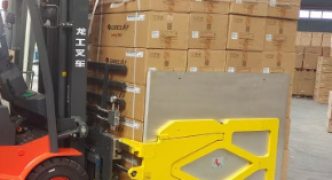
Finished paper cartons and bundled paper products can be stacked and handled as complete units using bale clamps. This supports high-throughput warehouse operations, improves outbound efficiency, and ensures product integrity during delivery.
4. Waste Material Recycling
Waste paper edges, scrap paper, and discarded cartons generated during paper production can be quickly clamped and transported using H-series bale clamps. This facilitates centralized recycling, maintains a clean production environment, and promotes efficient resource reuse.
III. Why These Forklift Attachments Matter in the Paper Industry
1. Improved Operational Efficiency
Secure clamping eliminates the need for manual assistance, streamlines handling processes, and significantly improves efficiency compared with traditional handling methods.
2. Reduced Overall Costs
Damage-prevention designs lower material loss caused by scratched paper rolls or damaged cartons. Automated handling reduces labor dependency, delivering strong long-term cost performance.
3. Enhanced Operational Safety
Stable clamping designs prevent load slippage or tipping, reducing accident risks. Operators no need to work in close proximity to heavy materials, minimizing hazards such as crushing or collisions and creating a safer working environment.
IV. Selection Recommendations
When selecting forklift attachments for paper industry applications, the following factors should be carefully considered:
- Material Characteristics: Choose attachments based on material type (paper rolls, pulp bales, tissue rolls), weight, size, form, and surface protection requirements. For example, soft paper rolls are best handled with paper roll clamps for tissues, while compressed waste paper bales require H-series bale clamps.
- Operating Scenarios: Warehouse stacking may benefit from attachments with flexible opening and rotating functions, while long-distance transfer prioritizes clamping stability. Narrow-aisle operations may favor split-arm or lightweight designs.
- Damage Prevention Requirements: For delicate materials such as tissue rolls, attachments with curved, patterned contact pads should be prioritized to minimize deformation and surface damage.
Conclusion
Efficient development of the paper industry relies on precise and reliable logistics support. With professional design, proven quality, and customized solutions, ANTWELL forklift attachments help paper manufacturers overcome material handling challenges and achieve improvements in efficiency, safety, and cost control.
If you are unsure which attachment best suits your application, please contact us. Our technical team will provide tailored selection advice and solutions based on your specific operating conditions—making material handling safer, more efficient, and more flexible.